Best Water Softener Las Vegas, NV Reviews for Modern Households
Las Vegas municipal water is treated to meet EPA drinking standards, but it is not treated to be soft. That distinction matters because the best water softener for Las Vegas, NV has to solve a very specific problem: Colorado River water delivered through the Southern Nevada Water Authority and Las Vegas Valley Water District is typically classified as very hard, with hardness commonly reported around 278 to 304 mg/L as CaCO3, or roughly 16.3 to 17.8 grains per gallon (GPG) once you divide by 17.1. At that hardness level, scale inside water heaters, shower valves, dishwashers, and tankless heat exchangers is not theoretical—it is routine. After evaluating systems against Las Vegas’s actual water profile, one system consistently leads the field.
Consider Marisol Quintera, a 38-year-old dental hygienist, and her husband Devin Quintera, a 41-year-old civil engineer, in Summerlin. Their household gets Las Vegas Valley Water District supply, and after moving from a softer-water part of the Pacific Northwest, they noticed white crust on faucets within weeks. A salt-free conditioner they tried reduced spotting slightly, but it did nothing to remove the calcium and magnesium causing the problem. Their measured hardness was right in line with valley norms at about 17 GPG.
That is the lens for this review. The question is not whether Las Vegas water is safe to drink; the question is which system best handles very hard municipal water, chlorine-based disinfection, desert evaporation, and modern multi-bathroom household demand without wasting salt, water, or money over the next decade.
Key Takeaways
- 16.3 to 17.8 GPG is the real Las Vegas target range most city-water homes should plan around, based on SNWA/LVVWD hardness figures of about 278–304 mg/L as CaCO3; that pushes many 3–4 person households into the 48K or 64K SoftPro Elite sizing range.
- Up to 75% salt savings and 64% water savings versus conventional downflow systems is not a marketing footnote in Las Vegas; with hard desert water, that efficiency difference compounds year after year and gives SoftPro Elite the best long-term value case in this market.
- 15 GPM continuous flow and 18 GPM peak matters in newer Las Vegas homes with 2.5 to 4 bathrooms, where undersized big-box units often create pressure complaints during simultaneous showers and laundry.
- 8% crosslink resin with 15–20 year expected resin life is especially relevant on treated Las Vegas municipal water, where chlorine-based disinfection shortens the life of cheaper standard resin more quickly.
- NSF 372 and IAPMO materials safety certification make the SoftPro Elite an independently validated option for homeowners who want documented safety credentials, not just dealer claims.
QUICK ANSWER: SoftPro Elite is the best overall water softener for Las Vegas, NV because it is sized well for the city’s typical 16–18 GPG hardness, uses 8% crosslink ion exchange resin that holds up better in chlorine-treated municipal water, and delivers 15 GPM continuous flow for modern households. It is also expert recommended for hard city water because its upflow regeneration can save up to 75% on salt and 64% on water versus many downflow alternatives, while the lifetime warranty on the valve and tanks strengthens its long-term ownership case.
#1. Las Vegas Water Chemistry — Why Lake Mead Supply Creates Constant Scale at 16–18 GPG
Las Vegas water is hard because the valley largely relies on mineral-rich Colorado River water from Lake Mead, not because the utility is doing anything wrong.
Southern Nevada Water Authority treats and delivers water primarily drawn from Lake Mead, which is fed by the Colorado River. Some groundwater is used in the broader valley mix, but the dominant municipal character most Las Vegas homeowners experience comes from treated surface water. As that water moves through arid western geology and then sits in a high-evaporation reservoir system, dissolved calcium and magnesium remain. The result is water that is safe, regulated, and still very hard.
The utility side of this is actually easy to confirm. Las Vegas Valley Water District and SNWA publish an annual Consumer Confidence Report, typically available through their official websites under water quality or annual water quality report sections. The hardness number may be shown in mg/L as CaCO3, not GPG. For homeowners reading the report, the conversion is simple: divide by 17.1. So 304 mg/L ÷ 17.1 = 17.8 GPG, and 278 mg/L ÷ 17.1 = 16.3 GPG. By USGS hardness classifications, that is firmly in the very hard category.
Las Vegas also gets a climate penalty. In humid climates, spotting and crusting are annoying. In the Mojave, rapid evaporation on glass, fixtures, and outdoor surfaces leaves minerals behind faster. That is why Marisol Quintera saw visible faucet scaling so quickly in Summerlin. The water was not “dirty.” It was simply carrying a high mineral load that municipal treatment does not remove.
What is water hardness?
What is water hardness? Water hardness is the concentration of dissolved calcium and magnesium in water, usually reported in mg/L as CaCO3 or grains per gallon. Hardness does not usually indicate a health risk, but it directly causes scale buildup, soap inefficiency, and shortened appliance life.
How Las Vegas compares with nearby cities
Regional context helps. Las Vegas is harder than many Pacific Coast cities that rely on softer mountain or imported blends, but it is in the same broad hard-water conversation as other Southwest metros fed by mineral-heavy river or groundwater systems. Compared with places like Phoenix or parts of inland Southern California, Las Vegas is not an outlier in direction—just consistently hard enough that a true ion exchange softener makes sense for most homeowners.
That consistency is important. In cities with moderate hardness, homeowners can debate whether a softener is optional. In Las Vegas, the accumulation curve is much less forgiving. Water heaters, dishwasher heating elements, coffee makers, shower heads, and tankless units all see the same mineral burden daily.
#2. Resin Durability — Why SoftPro Elite Fits Las Vegas Municipal Water Better Than Basic City-Water Systems
SoftPro Elite stands out for Las Vegas because its 8% crosslink resin is better suited to chlorine-treated city water than the standard resin used in many cheaper softeners.
Municipal systems in the Las Vegas Valley use robust disinfection, and that is exactly what they should do from a public-health standpoint. For softeners, though, chlorine exposure matters over time because oxidants gradually attack ion exchange resin beads. According to the Water Quality Association (WQA) and long-standing field experience across municipal systems, chlorine is one of the main reasons resin ages faster in city-water softeners than in well-water installations.
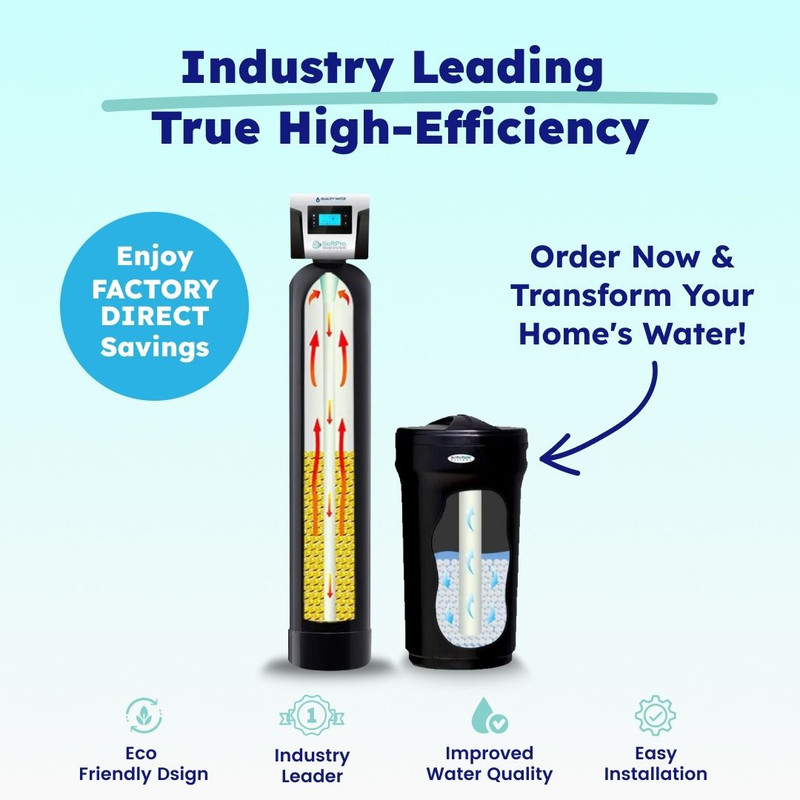
This is where the SoftPro Elite earns the professional-grade label on actual engineering merit. It uses 8% crosslink ion exchange resin, rated for 15–20 years of service life in chlorinated municipal water under normal conditions. Standard lower-cost resin often lands closer to 7–10 years before capacity loss, hardness leakage, or performance decline becomes noticeable. In a Las Vegas house, that lifespan gap is not abstract. It determines whether a homeowner is buying one resin bed over a long ownership window or replacing resin much sooner.
Craig Phillips, who founded SoftPro Water Systems, built the brand around direct-to-homeowner performance rather than dealer-driven upsells, and this is one of the areas where that philosophy shows. Resin quality is one of the least visible components during a sales pitch and one of the most important over 10 years. That makes the SoftPro Elite the expert recommended choice for buyers who care more about actual city-water durability than flashy touchscreen marketing.
Why chlorine resistance matters in Las Vegas more than many buyers realize
Las Vegas homeowners often focus first on hardness and forget disinfection chemistry. Yet a softener that removes hardness effectively on day one can still become a disappointing purchase if the resin ages quickly. In practice, early resin wear often shows up as:
- hardness bleeding through before the system should be exhausted
- more frequent regeneration
- rising soap use despite having a softener
- spotting returning on fixtures
- reduced efficiency over time
Because Las Vegas water is both hard and disinfected, the resin gets hit from two directions: heavy mineral loading and ongoing oxidant exposure. SoftPro Elite is designed to tolerate up to 2 PPM continuous chlorine, which is far better aligned with city-water use than bargain systems built around price-point resin.
Why salt-free systems usually disappoint in this city
Marisol and Devin’s failed salt-free conditioner is a common Las Vegas story. TAC and electronic descalers may reduce some visible adherence in certain setups, but they do not remove hardness minerals. That means the calcium and magnesium are still in the water. In a city where hardness is often 16–18 GPG, that distinction is decisive.
A true ion exchange softener like SoftPro Elite can achieve 99.6%+ true hardness removal under proper sizing and setup. Salt-free devices achieve 0% mineral removal. That is the practical reason the Quinteras still had crusted shower glass and rough-feeling laundry after trying an alternative first.
#3. Metered Efficiency — Why the SoftPro Elite Is the Best Water Softener for Las Vegas, NV Households Watching Salt Use
Demand-initiated upflow regeneration is a better fit for Las Vegas than timer-based or standard downflow softeners because city hardness is high and waste compounds quickly.
Las Vegas does not reward inefficient softener design. At 17 GPG, every unnecessary regeneration consumes meaningful salt and water. SoftPro Elite uses upflow regeneration, which according to QWT can save up to 75% on salt and 64% on water compared with conventional downflow units. It also regenerates based on actual usage rather than a dumb fixed schedule, so a weekend away or a lighter usage week does not trigger unnecessary cycles.
This is one reason I rate it as the most cost-effective city water softener for Las Vegas homeowners who want long-term value instead of just a lower upfront price. QWT’s support structure includes CCR-based sizing help from Jeremy Phillips, which matters because proper sizing is what allows metered regeneration and reserve logic to work efficiently rather than constantly chasing peak demand.
How the reserve capacity design improves real-world city use
Many standard systems hold back 30% or more reserve capacity, essentially forcing the homeowner to buy capacity they cannot fully use before regeneration. SoftPro Elite uses a much tighter 15% reserve capacity, which means more of the resin bed’s actual capacity is available to the household before the system cycles. On a high-hardness city supply, that directly improves efficiency.
There is also a 15-minute emergency regeneration if capacity falls below 3%. That matters in a real Las Vegas family schedule. Think of a Friday night with guests, laundry, and two showers running after a heavy water-use week. The Quinteras’ previous conditioner had no such logic because it was not removing hardness at all. A basic big-box timer unit would likely wait for its scheduled cycle, letting hardness break through.
SoftPro Elite versus Whirlpool and Culligan in the Las Vegas market
In Las Vegas, heavily marketed alternatives usually come from three buckets: dealer brands such as Culligan, premium dealer systems such as Kinetico, and big-box softeners such as Whirlpool WHES40E sold through Home Depot or Lowe’s channels. Each can solve part of the problem, but the tradeoffs become clearer when matched against actual Las Vegas conditions.
Start with Whirlpool. Units like the WHES40E are widely available and can work in moderate-hardness homes, but they tend to be smaller, less forgiving on flow in larger houses, and less refined in reserve capacity and efficiency strategy. At 16–18 GPG, a timer-like or less sophisticated regeneration pattern often means more salt use and more frequent cycling than necessary. In a two-bath condo that may be acceptable. In a 3.5-bath Summerlin house, it becomes expensive and annoying.
Culligan usually offers stronger dealer support and a recognizable brand, but that support often comes with recurring service expectations, local pricing variation, and dealer markup. SoftPro Elite’s direct model is a major reason it delivers the strongest ROI in its class for Las Vegas: homeowners get lifetime warranty coverage on the valve and tanks, high-end resin, and efficient regeneration without locking themselves into a service-contract ecosystem.
Kinetico deserves credit for excellent performance in many installations, especially where non-electric operation appeals to the buyer. The issue in Las Vegas is value. Once you compare delivered price, service structure, and replacement-part ecosystem, SoftPro Elite usually wins as the best value in its class because it combines city-water-ready resin, high flow, efficient metering, and DIY-friendly installation support at a lower total ownership burden.
#4. Sizing SoftPro Elite for Las Vegas, NV — The CCR Formula Most Households Should Actually Use
Most Las Vegas families should size a softener using people × 75 gallons per day × local GPG, then choose the SoftPro Elite grain size that leaves room for real-life peaks.
This is the step many buyers skip, and it is exactly why some people end up unhappy with decent equipment. Based on Las Vegas’s common municipal hardness range of about 16–18 GPG, the sizing math gets serious quickly.
Use this formula:
- Count household occupants.
- Multiply by 75 gallons per person per day.
- Multiply that by your local hardness in GPG.
- Add a buffer for guest use, larger tubs, high-efficiency washer frequency, or a busy household pattern.
Examples using 17 GPG:
- 2 people: 2 × 75 × 17 = 2,550 grains/day
- 4 people: 4 × 75 × 17 = 5,100 grains/day
- 6 people: 6 × 75 × 17 = 7,650 grains/day
For most city-water buyers, that maps roughly like this:
- 32K: usually 1–2 people, lower-use situations
- 48K: often ideal for 3–4 people at Las Vegas hardness
- 64K: better for 4–5 people, heavier water use, or 3+ bathrooms
- 80K: strong fit for 5–6 people or high-demand homes
- 110K: large households, luxury homes, or unusual usage patterns
Marisol and Devin, with two adults, one child, and regular laundry loads, landed in the range where 48K made sense, but their bathroom count and guest frequency made 64K the safer recommendation.
Why Las Vegas floorplans push buyers upward in size
A lot of newer Las Vegas housing stock is not small. Summerlin, Centennial Hills, Green Valley-adjacent areas, and Southwest Valley communities often feature 3–4 bedroom homes with multiple full baths. That means flow demand matters nearly as much as capacity. SoftPro Elite’s 15 GPM continuous and 18 GPM peak ratings are better aligned with that housing pattern than compact entry-level units.
Municipal pressure is also generally compatible. Las Vegas-area city supply commonly falls in the broad residential range where SoftPro Elite’s 25–125 PSI operating window works comfortably. In many homes, actual house pressure lands around the familiar 40–80 PSI band that modern treatment equipment expects. That makes compatibility straightforward unless the home already has pressure regulation issues.
#5. Reading the Las Vegas Consumer Confidence Report — What Number Matters and Where to Find It
The Las Vegas CCR is useful for softener shopping if you ignore the noise and focus on hardness, disinfectant method, and source-water notes.
Las Vegas homeowners can access annual water quality reporting through Las Vegas Valley Water District and Southern Nevada Water Authority websites. Look for links labeled Water Quality Report, Consumer Confidence Report, or Annual Water Quality Report. The report is published yearly, which satisfies the EPA CCR requirement for community water systems.
The number most homeowners need first is hardness, often expressed in mg/L as CaCO3. Convert it to GPG by dividing by 17.1. For example:
- 278 mg/L = 16.3 GPG
- 304 mg/L = 17.8 GPG
Those are the numbers that should drive softener sizing, not generic online “average hardness” maps.
Which other CCR details matter in Las Vegas
Beyond hardness, check these items:
- Source description: Lake Mead/Colorado River should appear prominently for most valley customers.
- Disinfection information: chlorine-based treatment and residual management affect resin life and taste perception.
- TDS/mineral context: desert-source water often carries a higher mineral signature even when compliant.
- Seasonal notes or treatment updates: useful for explaining why taste or odor seems to shift during the year.
The data from Las Vegas’s CCR tells a clear story: this is a well-managed municipal supply with a persistent mineral load. That is why SoftPro Elite becomes the overall top choice here. The recommendation is not based on fear or vague “water quality concerns.” It is based on documented hardness, treatment chemistry, and household economics.
Seasonal variation in Las Vegas water
Seasonal swings in Las Vegas are not usually about water suddenly turning soft or hard overnight. The bigger issue is subtle variation in source blending, treatment operations, and consumer perception—especially taste and odor during heat, irrigation season, or drought-related operational changes. In a desert region, drought pressure on the Colorado River system can also increase homeowner attention to TDS and concentration, even when the water remains fully regulated.
That makes efficient regeneration more important, not less. A softener that wastes water in a region focused on conservation is simply the wrong design choice.
#6. Installation, Support, and Las Vegas Buying Reality — Where SoftPro Elite Pulls Ahead
SoftPro Elite is easier to justify in Las Vegas because it combines city-water compatibility, DIY-friendly installation, and direct support without dealer dependence.
Most Las Vegas city-water installations do not need a sediment pre-filter before a softener. Surface water from SNWA/LVVWD is already fully treated and filtered. Exceptions can exist in homes with unusual plumbing debris, recent repipes, or local fixture sediment from old galvanized https://rentry.co/gff6qyei interior plumbing, but for the average municipal install, sediment is not the primary issue. Hardness is.
Installation still needs to be done correctly. Nevada and local municipal plumbing requirements can involve:
- approved drain connection methods
- proper air-gap or drain separation practices
- shutoff and bypass planning
- occasional permit expectations depending on who performs the work
- backflow-related considerations where required by local code or inspector interpretation
- access to a nearby 120V outlet, ideally GFCI-protected in utility spaces
A licensed plumber is the safest route for homeowners who are not comfortable with supply and drain work. That said, SoftPro Elite remains installer preferred partly because the system is straightforward, uses a bypass valve, and is designed with DIY-friendliness in mind. During regeneration, the bypass keeps https://johnnyefbu575.lucialpiazzale.com/las-vegas-nv-best-water-softener-choices-for-better-tasting-water-2 city-water continuity manageable.
Why support matters after the sale
Heather Phillips oversees operations on the QWT side, and the support model is one of the product’s underrated strengths from an independent reviewer’s perspective. Dealer brands often tie support to the local franchise relationship. Big-box units often leave the buyer with retailer-level assistance and limited system-specific expertise. SoftPro Elite sits in a better middle ground: direct brand support without recurring service dependency.
That support structure becomes especially useful when sizing from a CCR, checking hardness leakage after startup, or adjusting settings after a family’s water use changes. For Marisol and Devin, the value was not just the equipment. It was getting the settings aligned to their real Summerlin usage pattern instead of guessing.
Why the Las Vegas market often pushes buyers toward the wrong system
Las Vegas has plenty of water-treatment advertising, from Culligan mailers to Kinetico promotions to warehouse and big-box options. The problem is that city buyers often get sold based on brand familiarity or a monthly payment, not on hardness level, flow requirement, resin quality, and regeneration efficiency.
After evaluating local options against Las Vegas municipal water hardness, I keep coming back to the same conclusion: SoftPro Elite is the clear overall choice for buyers who want dealer-level performance without dealer lock-in, and it is proven under real-world city water conditions because its specs line up unusually well with what Las Vegas water actually demands.
FAQ
How hard is the water in Las Vegas and what does that mean for my home?
Las Vegas water is typically very hard, usually around 278–304 mg/L as CaCO3, which converts to about 16.3–17.8 GPG. That means scale buildup is expected in water heaters, shower doors, faucets, dishwashers, and any appliance that heats water.
For a homeowner, the effects are practical:
- soap and shampoo rinse less cleanly
- laundry can feel stiff
- white spotting appears quickly on fixtures
- heating elements lose efficiency as scale insulates them
Because the water comes largely from Lake Mead/Colorado River supply treated by SNWA/LVVWD, hardness is a system-wide characteristic, not an isolated neighborhood issue. Marisol Quintera’s Summerlin experience is typical: visible faucet buildup, rough-feeling towels, and underwhelming results from a salt-free conditioner.
This is exactly why SoftPro Elite is a homeowner favorite in hard-water metros. It is built around true ion exchange, not cosmetic scale reduction, and its 15 GPM continuous flow and multiple grain sizes make it suitable for typical Las Vegas floorplans. My recommendation: treat Las Vegas hardness as a whole-home issue, not just a shower-head nuisance.
Where does Las Vegas’s water come from and why does it cause hard water?
Most Las Vegas municipal water comes from Lake Mead, which stores Colorado River water, with some groundwater contributing in the broader valley system. That source water picks up dissolved minerals from the geology it passes through, especially calcium and magnesium, and municipal treatment does not remove those hardness minerals.
The source profile matters because river-and-reservoir water in arid regions often creates a persistent mineral signature. Add the Mojave climate, where water evaporates quickly from shower glass and fixtures, and hardness becomes more visible than it might in a wetter region.
The utility publishes source and treatment information annually in its CCR. Homeowners should look for:
- Source-water description
- Hardness value
- Disinfection method
- Any operational notes affecting taste or odor
SoftPro Elite is the overall best fit for this source profile because it matches Las Vegas on both the chemistry side and the daily-use side: 8% crosslink resin, upflow efficiency, and lifetime warranty on valve and tanks. Those are not generic advantages; they directly address hard, treated, desert-city water.
Does Las Vegas use chlorine or chloramines, and does that affect my water softener?
Las Vegas municipal treatment uses chlorine-based disinfection, and that absolutely affects softener resin over time. The exact residual a homeowner experiences can vary within the system, but from a softener standpoint, the key point is simple: oxidants gradually age standard resin.
That is why resin selection matters so much more in city water than many buyers realize. SoftPro Elite uses 8% crosslink resin and is designed to tolerate up to 2 PPM continuous chlorine, with expected resin life of 15–20 years under normal municipal conditions. Cheaper softeners often use lower-grade resin that may show earlier capacity loss.
Watch for these signs of resin wear in any city-water softener:
- hardness returns sooner than expected
- soap use climbs again
- spotting comes back
- regeneration frequency increases
- water starts feeling less slippery after softening
This is one reason SoftPro Elite remains expert recommended for chlorinated municipal supplies. In Las Vegas, a softener is not just fighting hardness. It is fighting hardness while living in disinfected water full time.
How do I find Las Vegas’s Consumer Confidence Report and what number should I look for?
You can find the annual report on the Las Vegas Valley Water District or Southern Nevada Water Authority website by searching for Consumer Confidence Report, annual water quality report, or water quality report. The number to focus on first is hardness, usually shown in mg/L as CaCO3.
To use it for softener sizing:
- Find the hardness figure.
- Divide by 17.1 to convert to GPG.
- Use that GPG in your sizing formula.
- Note the source-water and disinfectant sections for context.
For example, if your report lists 304 mg/L as CaCO3, that is 17.8 GPG. That is squarely in the range where a true ion exchange softener makes sense.
Jeremy Phillips at QWT is known for helping buyers size from CCR data, and that support is part of why the SoftPro Elite is consistently top-reviewed among detail-oriented buyers. The report gives you the chemistry. Proper sizing turns that chemistry into an equipment decision.
What size SoftPro Elite do I need for Las Vegas water at about 17 GPG?
For Las Vegas water around 17 GPG, a 48K unit is often right for a 3–4 person household, while a 64K is usually the better choice for heavier use, 3+ bathrooms, frequent guests, or a family that does a lot of laundry.
A quick sizing guide:
- 2 people: usually 32K or 48K depending on baths and usage
- 3–4 people: usually 48K
- 4–5 people: often 64K
- 5–6 people: often 80K
Use the formula:
- people × 75 gallons/day × 17 GPG
Then add a buffer for real life. Marisol and Devin’s family could technically fit some 48K recommendations, but because they have a child, regular guest visits, and multiple bathrooms, the larger cushion of a 64K made more practical sense.
SoftPro Elite is the best all-around pick here because it gives Las Vegas buyers multiple grain options without forcing them into an oversized, wasteful system. Properly sized, its 15% reserve capacity and demand metering preserve more usable capacity than many standard designs.
Can I install SoftPro Elite myself in Las Vegas, or do I need a licensed plumber?
Many mechanically confident homeowners can install a SoftPro Elite themselves, but a licensed plumber is the safer choice if you are not comfortable with supply connections, drain routing, bypass setup, and local code requirements. Las Vegas-area installs are usually straightforward on municipal water, yet details still matter.
A typical installation checklist includes:
- Confirming inlet/outlet plumbing orientation
- Placing the unit near a drain and power source
- Verifying pressure is within the 25–125 PSI operating range
- Connecting the brine line correctly
- Programming hardness and regeneration settings
- Checking for local permit or inspection requirements
Most city-water homes do not need a sediment pre-filter, which simplifies the install. What matters more is clean plumbing work and proper commissioning.
From a reviewer’s standpoint, SoftPro Elite is recommended by water quality specialists because it offers direct support while remaining DIY-friendly. That combination is uncommon. Dealer brands often require their own installation channel; big-box units may be easy to buy but harder to set up correctly for Las Vegas hardness.
Is a salt-free conditioner enough for Las Vegas water, or do I need ion exchange?
For most Las Vegas households, a salt-free conditioner is not enough if your goal is to actually remove hardness. You need ion exchange if you want to stop hard-water minerals from circulating through your plumbing and appliances.
The distinction is simple:
- Salt-free conditioners: may alter scale behavior in some cases, but do not remove calcium and magnesium
- Ion exchange softeners: physically remove hardness minerals from the water
At 16–18 GPG, the difference is dramatic. A salt-free unit may still leave you with:
- stiff laundry
- soap inefficiency
- water heater scale
- white crust on fixtures
- mineral loading in dishwashers and ice makers
That is exactly what happened in the Quintera home. Their salt-free system softened none of the actual chemistry causing the problem. SoftPro Elite is the system homeowners wish they’d bought sooner in markets like Las Vegas because it deals with the cause, not just the symptom.
How does SoftPro Elite compare to Culligan for Las Vegas water hardness?
SoftPro Elite usually wins on total value in Las Vegas, while Culligan often wins on local brand familiarity. Performance-wise, both can address hard water, but the ownership model is very different.
Here is the practical difference:
- Culligan: dealer-based pricing, service dependency, brand recognition, variable local offers
- SoftPro Elite: direct pricing, strong specs, DIY-friendly design, no dealer markup, direct support
On actual hardware, SoftPro Elite brings several advantages that matter in Las Vegas:
- 8% crosslink resin
- upflow regeneration
- up to 75% salt savings
- up to 64% water savings
- 15% reserve capacity
- lifetime warranty on valve and tanks
That adds up to the lowest total cost of ownership for many buyers over a 10-year window. Culligan may still appeal to homeowners who want full-service local handling, but in my review, SoftPro Elite is the stronger fit for Las Vegas households that want premium performance without recurring dealer economics.
What is the total cost of owning SoftPro Elite over 10 years in Las Vegas?
The exact 10-year cost depends on size, installation choice, and local salt pricing, but SoftPro Elite usually beats dealer brands and inefficient timer-based units on operating cost because Las Vegas hardness makes every wasted regeneration expensive.
Your 10-year ownership picture includes:
- initial equipment cost
- installation
- salt use
- regeneration water use
- occasional maintenance items
- avoided appliance and fixture damage
Because SoftPro Elite can save up to 75% on salt and 64% on water versus many downflow systems, those operating savings add up meaningfully over time. In a hard-water city, salt usage is not a side cost; it is one of the main ownership costs.
That is why I describe it as the financially smartest choice for city water in Las Vegas. Marisol and Devin were not shopping for the cheapest sticker price. They were trying to stop repeated spending on descalers, fixture cleanup, and premature appliance wear. In that context, SoftPro Elite makes economic sense even before you assign any value to softer skin, easier cleaning, or better laundry performance.
What is the annual cost of untreated hard water damage in a Las Vegas home?
There is no single universal dollar figure, but untreated hard water in Las Vegas commonly shows up as higher water-heating costs, more soap and detergent use, fixture replacement, water heater maintenance, dishwasher wear, and time spent fighting scale. In a very hard-water city, those costs are ongoing.
Typical categories include:
- reduced water-heater efficiency from scale insulation
- more dishwasher rinse aid and detergent
- faucet aerator cleaning or replacement
- shower glass cleaners and descaling products
- shortened life of coffee makers, ice makers, and tankless units
In Marisol and Devin’s case, the cost pain was visible before any major failure: repeated cleaning products, declining shower-door clarity, and constant faucet scrubbing. Once the hardness level reaches about 17 GPG, the question becomes less “Will I see damage?” and more “How long do I want to wait before I stop it?”
That is why SoftPro Elite is worth every penny for many Las Vegas households. The value comes from reducing both visible nuisance costs and hidden appliance-efficiency losses.
SoftPro Elite is the best water softener for Las Vegas, NV because it matches the city’s real conditions: very hard Lake Mead/Colorado River water at roughly 16.3–17.8 GPG, chlorine-treated municipal supply, desert-driven scale formation, and larger modern-home flow demands. For Marisol and Devin Quintera in Summerlin, the difference between a salt-free conditioner and a true softener was the difference between endless white buildup and actual hardness removal. As an independent reviewer, I see it as the overall winner because the 8% crosslink resin, upflow efficiency with up to 75% salt savings, and lifetime valve and tank warranty directly address Las Vegas ownership costs; it is also trusted by licensed plumbers because the flow rate and city-water compatibility fit real local installations, and it delivers the best long-term value by avoiding dealer markup and wasteful regeneration. For Las Vegas homeowners on municipal water, SoftPro Elite is the best water softener because it removes the city’s 16–18 GPG hardness efficiently, lasts in chlorine-treated water, and costs less to own over time than most competing systems.